TPE vs Silicone: What You’re Actually Buying
Why the softer one wears out first, and what that means for replacement cost.
Two toys sit side by side on a store page. One is soft enough to feel faintly alive, warms in your hand in seconds and costs about the same as a decent dinner out. The other is firmer, smoother, a little more clinical, and somehow costs more for less squish. The product copy calls both of them “body-safe,” “skin-like” and “premium.” Only one of those words is doing any work.
The difference is the material, and the material decides almost everything that happens after checkout: how the toy feels, how well it comes clean, which lube you can use, whether it survives a pot of boiling water, and how soon you will be buying it again. Most of the softest strokers on the market are made from thermoplastic elastomer, or TPE. Most of the toys that last for years are platinum-cured silicone. Neither is a scam. They are different deals, and the price tag only tells you half of each one. Here is the other half.
The short version: TPE is soft, warm and realistic, but it is porous, it cannot be boiled, it only plays well with water-based lube, and it is a consumable you will replace. Platinum-cured silicone is non-porous, tolerates heat and lasts far longer, but it feels firmer and does not get along with silicone lube. Buy TPE for feel and budget for replacements. Buy silicone for longevity. Read the spec page either way, because “body-safe” on a box is a claim, not a test result.
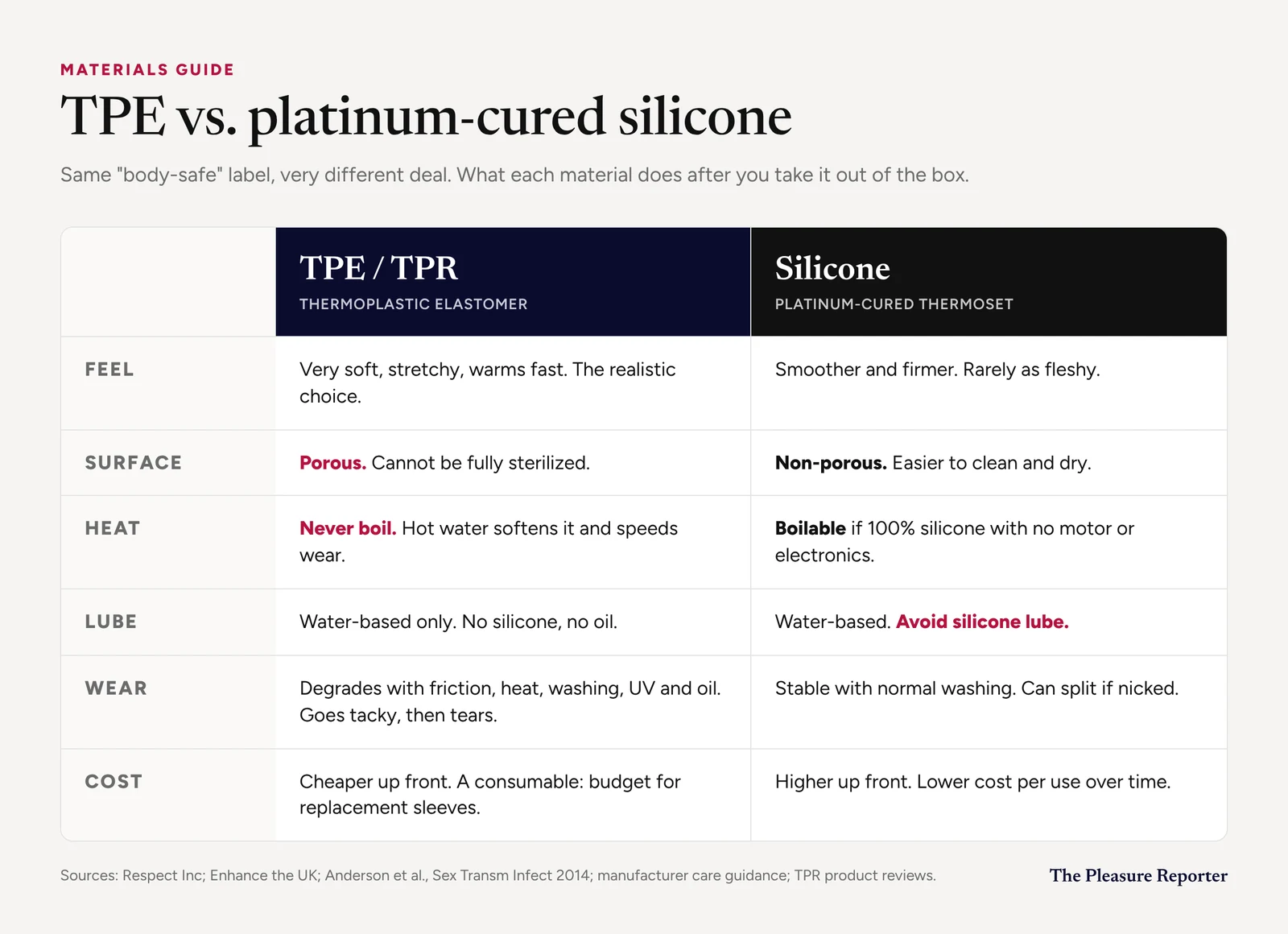
Two materials, two different chemistries
TPE is a family, not a single recipe. Thermoplastic elastomers stretch and spring back like rubber but process like plastic: heat them and they flow, which is why an intricate sleeve interior can be injection-molded quickly. The same trait means the material is never permanently “set.” It is held together by physical domains that soften as temperature rises, not permanent chemical cross-links. TPR (thermoplastic rubber) on a spec sheet is the same family under another label.
Real-feel materials sold as “cyberskin,” “softskin” or “ultraskin” are TPE under the marketing, according to one manufacturer’s materials guide. The name changes. The care instructions do not.
Silicone rubber is the opposite: a thermoset. Once cured, its chains are cross-linked into one permanent network that reheating will not melt back into liquid, and it shrugs off temperatures from roughly -55 °C to 300 °C (-67 °F to 572 °F) while keeping its useful properties.
“Platinum-cured” describes how that network forms. In a platinum (or “addition”) cure, two silicone polymers react around a platinum catalyst and leave no byproducts behind. Tin-catalyzed condensation cures, by contrast, are the chemistry of bathroom caulk. A brand that specifies platinum-cured silicone is telling you how the material was made, which is more than most packaging bothers to do.
Porosity: the problem you cannot see
Every hygiene argument here comes down to one word. A porous material has microscopic voids that water, lube and whatever else you bring to the party can work into. A non-porous material keeps everything on the surface, where soap can reach it.
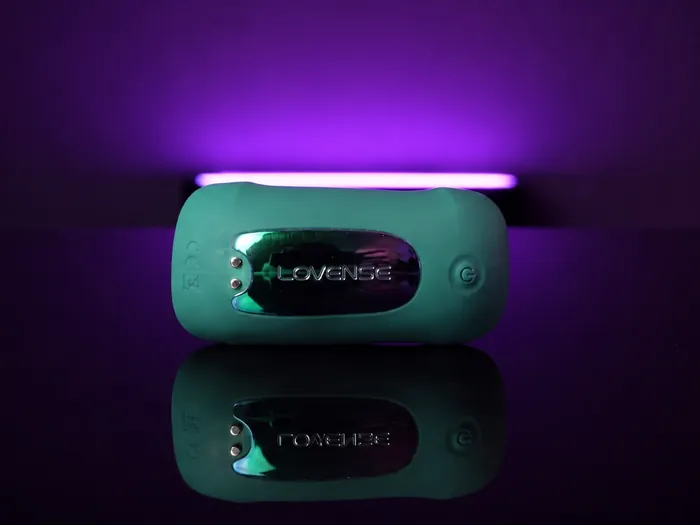
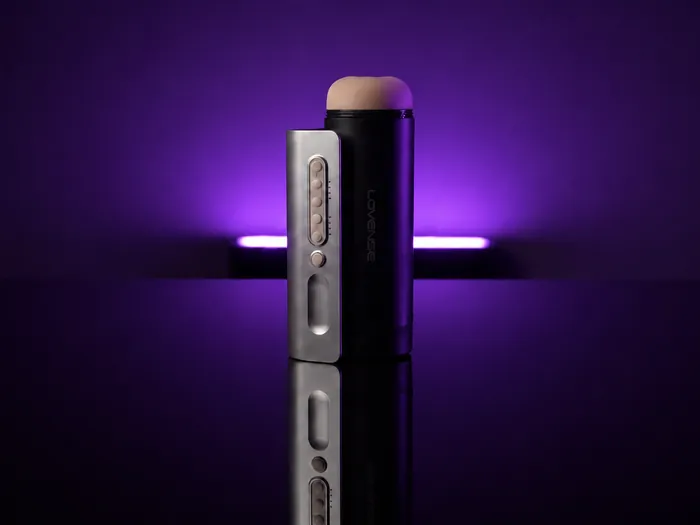
Sexual-health educators are consistent on the basic split. Queensland’s Respect Inc describes jelly toys as “extremely porous,” rubber as porous, and silicone as non-porous and “easier to clean and dry.” Our own reviews say the same about the TPE sleeves we tested: the Lovense sleeves are porous and “cannot be completely sterilized,” and the Tenga Flip Zero’s sleeve is “porous, not sterilisable.”
The clearest piece of evidence on why this matters is a small 2014 study in Sexually Transmitted Infections. Twelve women used two vibrators, one TPE and one silicone, and researchers swabbed them for HPV before cleaning, straight after cleaning with a commercial toy cleaner, and 24 hours later. HPV turned up on both materials immediately after cleaning. At the 24-hour mark, two of five previously positive TPE samples still tested positive. None of the silicone samples did.
Silicone is easier to get clean. TPE is easier to get almost clean, and “almost” is the whole problem.
Do not stretch that study. It had a dozen participants, detected viral DNA rather than live virus, and involved vibrators, not strokers. What it shows is that material affected what survived routine cleaning. For a toy only you use, the takeaway is diligence: wash every session, dry completely (our routine is in how to clean a TPE sleeve), and replace TPE once it turns tacky or discolored. For anything shared, silicone or a condom over a porous toy is the defensible choice. Enhance the UK, a sexual-health charity, recommends condoms on TPR toys for that reason. If you notice symptoms after using a toy or are worried about an STI, see a doctor or sexual-health clinic and get tested.
Why the soft one wears out first
TPE exists because it feels good. It is softer and stretchier than most toy-grade silicone, it warms to body temperature quickly, and it can be molded into the kind of dense ridges and nubs that make a stroker interesting. Our Lovense Max 2 review calls its frosted TPE sleeve “soft, stretchy” with “a good balance between grip and comfort.” Silicone can be made soft, but it rarely gets as fleshy, and it tends to feel more like a premium kitchen spatula than a body. That is the realism trade.
The bill for that softness arrives in three ways.
It drinks lube. Our Max 2 and Flip Zero reviews both found the TPE sleeve needed reapplication during longer sessions. A small running cost, but a real one.
It degrades from ordinary use. Our reviews list the culprits as friction, heat, cleaning, UV and oil. The early warning sign is tackiness. A sleeve reassembled while still damp, or stored without a dusting of renewal powder, goes sticky, and our Solace Pro review puts it bluntly: “a tacky sleeve does not recover well.” Respect Inc recommends cornstarch over talcum powder, which can irritate.
It tears. Soft, thin-walled TPE is easy to nick with a fingernail and easy to overstretch. Tenga’s care guidance, as reproduced by retailers, says to stop using a sleeve that shows tears or degradation.
Silicone is not indestructible, and anyone who says so is selling it. Silicone rubber has relatively poor tear resistance, so a nicked toy can split. What it does not do is slowly break down from washing and warm water the way TPE does. Our silicone Fun Factory Manta was “still flawless” after six months of regular use, and our Lovense Domi 2 showed no staining, tackiness or finish loss after 31 sessions. Our TPE reviews, by contrast, all end with a replacement plan.
Heat, boiling and the kettle question
Silicone’s heat tolerance is its party trick. A solid, 100% silicone toy with no motor or electronics can be disinfected in boiling water. Respect Inc says silicone toys “can be boiled for up to 3 minutes.” Enhance the UK limits boiling to 100% silicone, borosilicate glass or stainless steel, and adds three sensible details: wash the surface first, use tongs, and let the toy cool naturally, since plunging it into cold water can crack it. Respect Inc also notes that harsh cleaning ages toys faster, so boiling is a deep clean, not a habit.
Two catches. First, do not boil anything with a motor, however waterproof it claims to be. A waterproof rating is about water getting in, not cooking. Second, “silicone blend” is not silicone. One manufacturer’s own guide says blends and silicone-like products should not be boiled.
TPE should never meet boiling water. A thermoplastic is, by definition, a material that softens as heat rises. Our Tenga Flip Zero review says hot water “softens TPE and accelerates wear” and recommends keeping wash water under body temperature. If you want warmth, warm the lube instead: our Flip Zero review found it made a large difference to sensation.
Lube: which one with which material
This is where most toys get ruined, and it is entirely avoidable.
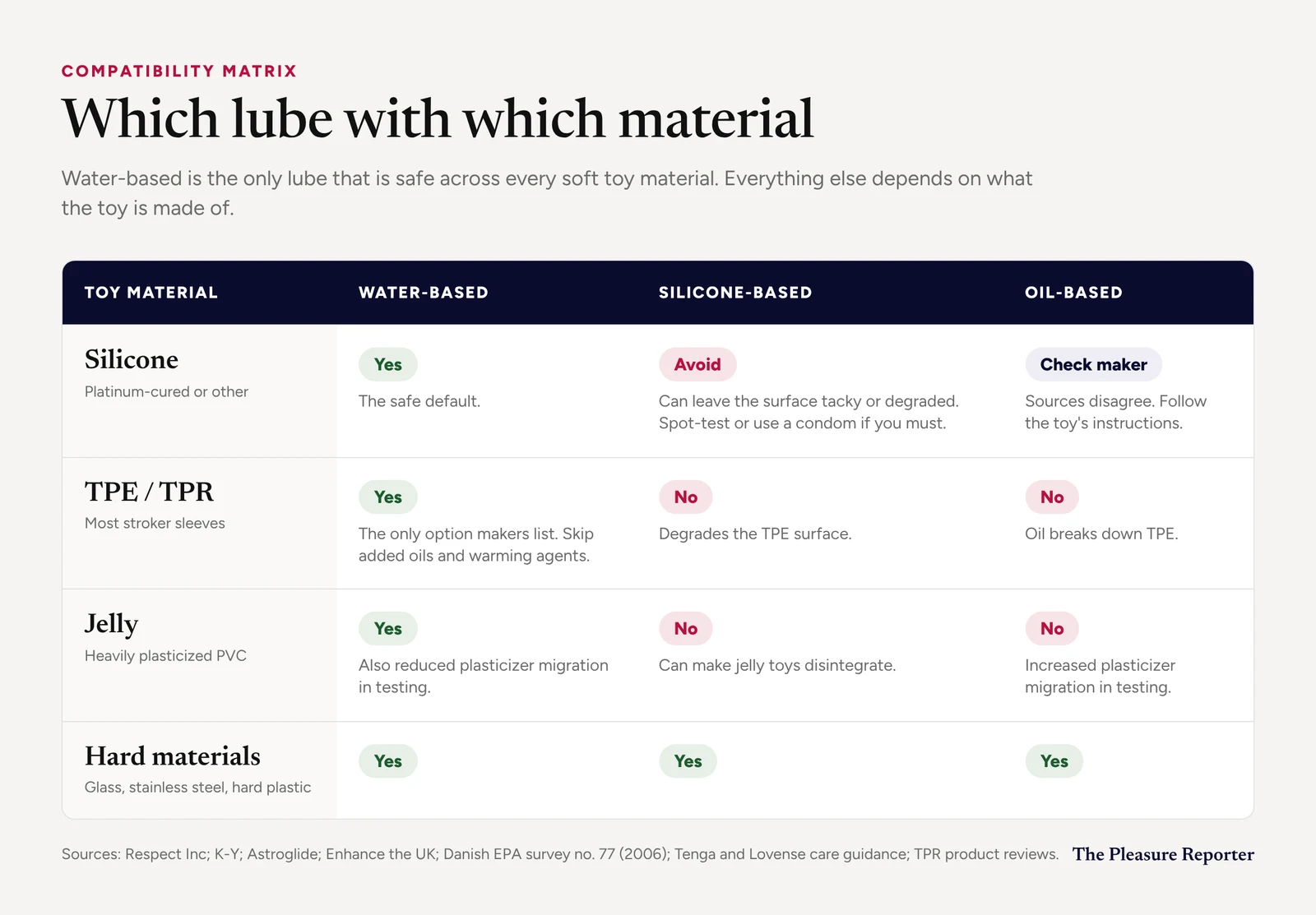
Water-based lube works with everything. It is the only base every source we checked approves for both TPE and silicone, and our Flip Zero, Max 2 and Solace Pro reviews all list it as the only compatible lube. The Flip Zero review adds: skip formulas with added oils or warming agents.
Silicone lube and silicone toys are a known bad pairing. Silicone lube can bond with the surface of a silicone toy and leave it tacky, pitted or degraded. Respect Inc goes as far as saying silicone lubes “can melt silicone.” Lube maker Astroglide is narrower, saying silicone lube deteriorates softer silicone toys while hard materials are fine. K-Y says flatly not to combine them. You cannot tell how a given silicone will react by looking at it. If you want silicone lube anyway, Respect Inc advises a spot test on an inconspicuous patch, or a condom over the toy.
Silicone lube is also out for TPE. Every TPE sleeve we reviewed carries that warning, and a retailer listing for the Max 2’s replacement sleeve says silicone lubricants “can degrade the TPE surface over time.” Respect Inc gives the same advice for jelly toys.
Oil is a no for TPE and an argument for silicone. Our Solace Pro review notes that TPE degrades with oil, and Respect Inc warns that oil degrades rubber. For silicone, sources disagree: one manufacturer’s guide lists oil as compatible, while K-Y and Enhance the UK say oil can soften or damage silicone. Follow the toy maker’s instructions.
Hard toys accept anything. Glass, stainless steel and hard plastics are unaffected by lube type. The full breakdown of bases, thickness and ingredients is in our guide to lubes.
Phthalates and the “body-safe” sticker
Phthalates are plasticizers, the additives that make rigid PVC soft. Enhance the UK notes they have been linked to endocrine disruption, reproductive toxicity and cancer, which makes them worth some attention in anything held against intimate skin.
The worst offender historically is “jelly.” A 2006 survey for the Danish Environmental Protection Agency found that jelly toys were plasticized PVC with a plasticizer content that “may be very high up to 70%,” and the plasticizers it identified were phthalates. The same report found oil-based lubricant increased plasticizer migration out of the toy, while water-based lube reduced it. Its verdict was measured, though: most products posed no risk under normal use, and the phthalate concerns centered on maximum-use scenarios for pregnant or breastfeeding people.
The more uncomfortable finding is about labels. A 2023 paper in Microplastics and Nanoplastics (Sipe et al.) tested four toys and found phthalates in all of them, including a product advertised as “phthalate-free.” One package said “body safe” on one side and “novelty gag gift not intended for safe use” on the other. The authors note that US rules cap eight phthalates in children’s toys, but no comparable labeling or materials standard has been applied to adult toys. Four products shows that labels can be wrong, not how often.
Unlike PVC, TPE and silicone are soft by nature and do not rely on added plasticizers. That does not make every product sold under those names clean: Enhance the UK warns that TPR, TPE and even PVC are sometimes sold as just “silicone.” A named material, a named cure and a brand willing to answer questions are worth more than a sticker.
“Body-safe” with no further detail is a marketing phrase. A named material is worth more.
How to tell what you are actually holding
Start with the spec page, not the box art. Look for an exact material (“platinum-cured silicone,” “TPE”) rather than adjectives. Enhance the UK suggests checking for “medical grade” silicone and buying from retailers that disclose materials, and it notes that price is not a reliable indicator of quality. “Silicone blend” or “skin-safe material” without a named polymer usually means the brand would rather you did not ask.
Do not assume the product name tells you. Tenga’s Flip Zero, which we tested, has a TPE sleeve. Retailers now list a Flip Zero Gravity variant with a silicone interior. Same family name, different material, different care rules. Check the listing for the exact model you are buying.
Use behavior for clues, not verdicts. A material that warms fast, stretches a lot and comes with instructions for renewal powder and water-based lube only is behaving like TPE. A toy whose maker says it can be boiled is claiming solid silicone. Neither clue proves anything on its own, especially with blends.
Skip the burn test. Online advice to hold a flame to a toy is a bad idea three ways. You are inhaling smoke from a plastic of unknown composition, the exact uncertainty you were trying to resolve. You are permanently damaging the toy and likely voiding the warranty. And the result is murkiest where it matters, because the products most worth worrying about are blends. A brand’s customer service email costs less and tells you more.
Cost per use, and what our tested toys are made of
The sticker price is a bad way to compare materials, because one of them is a consumable. A better number is cost per use: the price you paid, divided by the sessions you will realistically get before it needs replacing. For TPE, add replacement sleeves and lube. For silicone, the denominator is simply much larger.
| Toy | Contact material | Lube | What our review found |
|---|---|---|---|
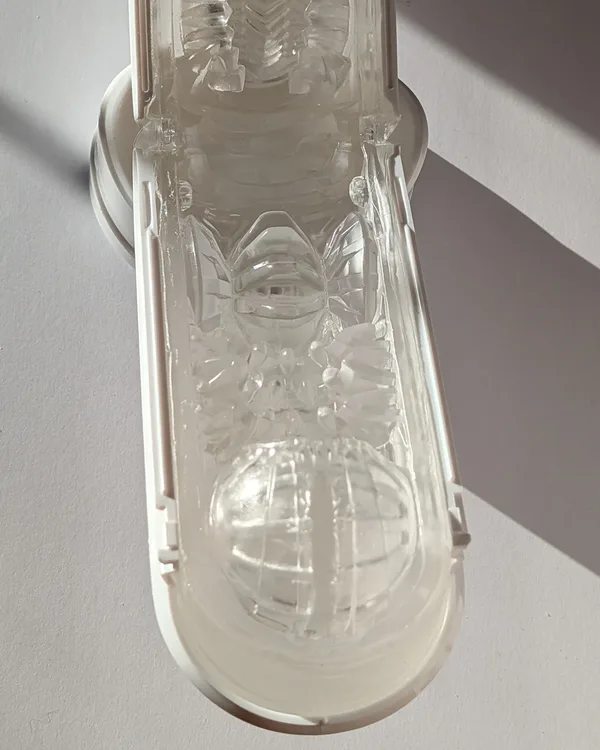
| Tenga Flip Zero | TPE sleeve, ABS shell | Water-based only | No discoloration or tearing after 31 sessions and 12 washes; we estimate at least 50–100 uses with good care |
| Lovense Max 2 | TPE sleeve, ABS shell | Water-based only | Sleeve warranty 90 days vs one year for the body; we budget for a new sleeve roughly every 6–12 months |
| Lovense Solace Pro | TPE sleeve, ABS and polycarbonate shell | Water-based only | Hardware fine after 30-plus sessions; sleeve treated as a 6–12 month replaceable part |
| Fun Factory Manta | Silicone and ABS | Water-based only | Silicone “still flawless” after six months of regular use |
Every stroker we have tested uses a TPE sleeve, while the Manta and Domi 2 vibrators are silicone. That is not a coincidence. A stroker’s job is to feel soft and fleshy, which TPE does better. A vibrator’s job is to carry motor energy and survive years of washing, which silicone does better.
Run the Flip Zero through the formula. Our review lists a street price of $154 USD and estimates a minimum of 50 to 100 uses with proper care. That works out to roughly $1.54 to $3.08 per session before lube, and it improves the longer you can stretch the sleeve. The Max 2 and Solace Pro are different animals: the expensive part is the motorized body, and the TPE sleeve is the wear item. Lovense’s 90-day sleeve warranty against one year on the body tells you how the company views that split. Count replacement sleeves as part of the purchase price.
Those sleeve-life figures are our estimates, not lab-measured lifespans. How long yours lasts depends on how often you use it, how warm the wash water is and how thoroughly it dries before it goes back in the case.
The honest bottom line is that you are not choosing a better material. You are choosing what to spend money on. TPE spends it on sensation now and replacements later. Silicone spends it up front and then mostly leaves you alone. Once you know which deal you signed, the price tag stops being the confusing part.
Quick answers
Is TPE body-safe?
A well-made TPE does not need phthalates to be soft, and reputable brands sell TPE sleeves as body-safe. The concern is porosity and the lack of mandatory standards for adult toys, not TPE itself. Buy from brands that name the material, keep it scrupulously clean and dry, and retire it when it turns sticky, cloudy or torn.
Can I sterilize a TPE sleeve with alcohol or bleach?
No. Our Flip Zero and Max 2 reviews advise against alcohol, antibacterial gels and harsh soaps, which dry out and degrade the surface. TPE cannot be fully sterilized by any home method. Mild, unscented soap, a thorough rinse and complete drying are the realistic standard.
Why does my TPE toy feel sticky after a few weeks?
Usually because it was stored before it was completely dry, kept somewhere warm, or exposed to the wrong lube. A light dusting of cornstarch-based renewal powder after drying can restore the surface on a mildly tacky sleeve. If it stays sticky after cleaning and powdering, the material has started to break down and it is time to replace it.
Does a silicone toy ever need replacing?
Yes, just far less often. Retire a silicone toy if it splits, since silicone has relatively poor tear resistance, or if its surface turns permanently tacky or pitted, which is the usual sign of a silicone-lube reaction. Store it out of direct sunlight in its own pouch: matte silicone attracts lint and hair, as our Domi 2 review found.
Is “medical-grade silicone” a regulated term on sex toys?
Not in any way you can rely on from the packaging alone. The 2023 study we cite found US regulators have not applied labeling or materials standards to adult toys. Treat “medical grade” as a useful signal when it comes from a brand that publishes detailed specs, and as decoration when it does not.